MALCOLM WILSON
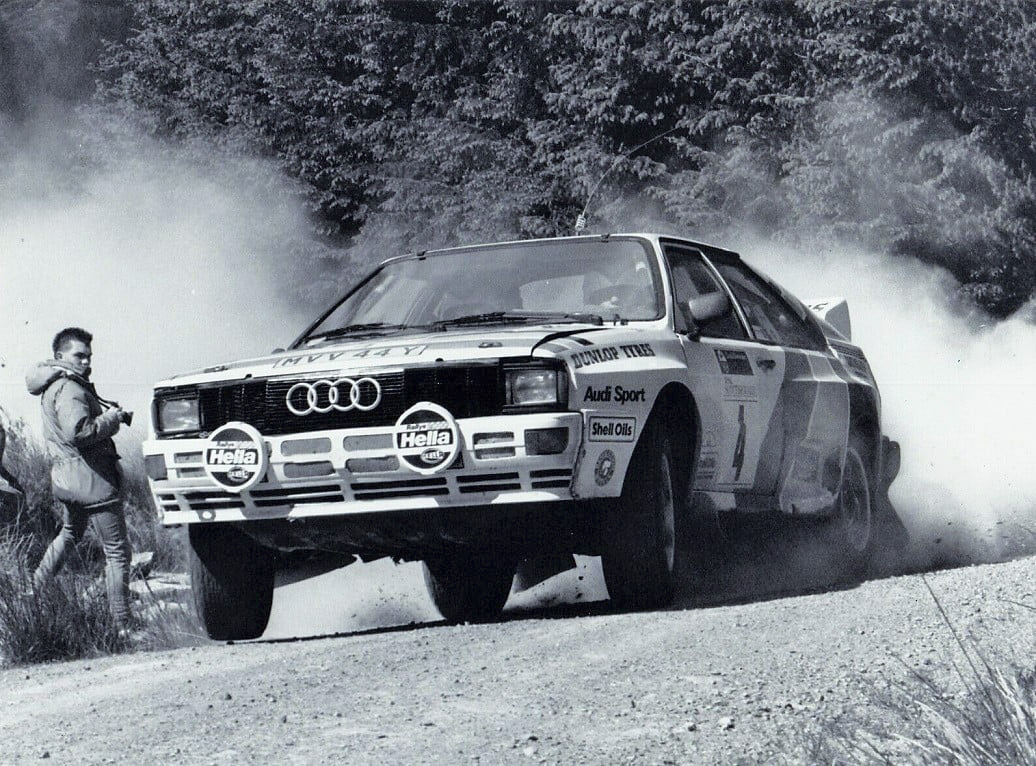
For the younger generation Malcolm Wilson is the guy that signed Colin McRae at Ford or the guy that jumped up and down when Seb Ogier won the title for Ford, for us older lot Malcolm was one of the fastest rally drivers these Isles have ever produced. Bob Irvine spoke to the Cumbrian about his driving days.
Malcolm actually began driving at the age of eight “my parents had a dismantling yard and did tyre distribution etc., and I used to drive cars around the yard. When I was about ten guys would be coming in and pulling out Cortina and Anglia engines to go rallying. I had no idea what it was all about but I thought these guys were great. They all knew I was mad keen and one of them offered me a chance to do a rally with them. I will never forget sitting in the back seat of this Anglia, we came to this bend and the driver floored it and we were sideways, that was it, from that moment I was totally hooked!”
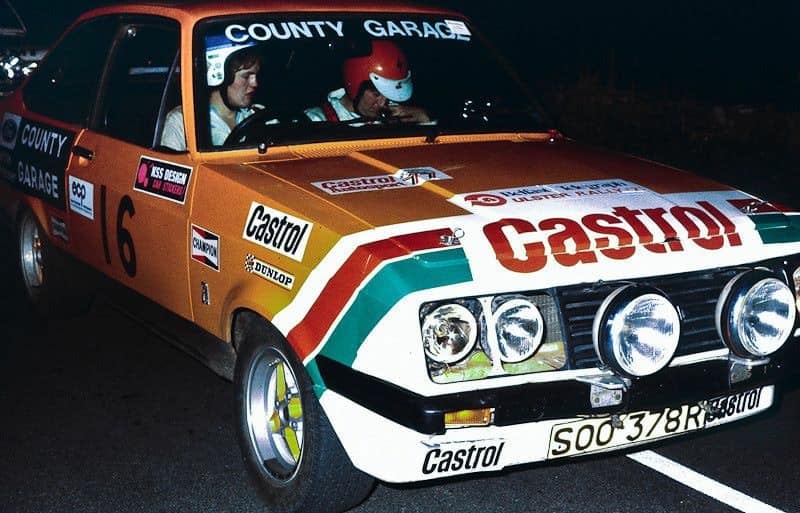
From that age Malcolm was focused on the sport: “you have to remember, rallying in those days was huge, especially here in Cumbria, there used to be regular navigational classes which I would attend, and I was servicing on the Scottish Rally when I was 13”. As soon as he could Malcolm got his hands on a 1300 Mk1 Escort and swapped seats, recalling “my first event driving was the Peak Revs rally - in those days the CCC Marina used to clean up in Class but I managed to beat it”. Before long the car was fettled for the forests and it was entered on its first stage rally, The News and Star Stages.
Like every driver in the land Malcolm decided he needed more power so the 1300 engine was removed and a BDA replacement was installed. It was about this time Malcolm realised he was competitive and wanted to become more so. “We did the Autumn Stages, Murray Grierson thought he was in the lead until someone pointed out that I was beating him by 18 seconds, and I went on to win my first big event”.
A Group1 win on the Scottish was also forthcoming. It was obvious Wilson was going places in the sport, the results kept on coming and the car was upgraded to a MkII and it wasn’t long before he won the National title, not once but two years in a row. So, was the grand plan to get a works drive now that the performances were being talked about? “No, I never even thought about that, I was just focused on doing well, the truth is, I wanted to be just like Roger Clark back in the day, he was fantastic, everyone idolised him in the sport”.
By this time Malcolm was sponsored by Total where he had a young Scandinavian team mate called Henri Toivonen. I asked him if he knew Henri would go on to be the real deal: “Yes. I knew right away, I was often faster than Henri back then but there was just something about him, he was fantastic at adapting to new events and great at adapting to pace notes; he was destined for big things”. The Total years are when Malcolm really started being talked about, in ‘79 he managed to finish a terrific 2nd O/A on the Scottish Rally despite picking up 13 punctures during the event, the toughest in the UK and second in stature only to the RAC Rally.
That years’ Scottish included such names as Hannu Mikkola, Björn Waldegård (winner of the previous weekends Acropolis Rally), Tony Pond, Stig Blomqvist, Pentti Airikkala, Russell Brookes, Per Eklund and Jean Pierre Nicholas. This was the company Malcolm was up against and finishing second was a measure of his ability if anybody needed it.
Times were certainly different back then, and a week after the Scottish he and Henri were sent to mix it with the Rallycross boys. “We went to Mallory Park with the Escorts from the previous weeks Scottish. The cars were heavy as hell compared to the Rallycross boys and I was delighted with the fastest time of the day, but I don’t think the Rallycross boys were too chuffed!”
In 1980, still in the Total Escort, Malcolm had a well-documented monster crash in the Inchnacardoch stage on the Scottish Rally where the Cumbrian sustained two broken ankles in a career-threatening incident. A lot of us mere mortals might have given up the sport at that point but Malcolm was determined to come back fighting, and after recovering for twelve weeks the helmet was on again for the Bowmaker Stages. “There’s no doubt I was affected by the crash. Ultimately, I finished the event behind Drew Gallacher, but I was back to scoring fastest times by the afternoon stages. I then went to the Tour of Cumbria and managed to win; there was a healthy entry that day, Brookes, Pond etc. so I knew I was back to where I needed to be at that point”.
The crash was the lowlight of the year, the highlight was his victory in Haspengouw in Belgium, his first event abroad.
During his convalescing period after the Scottish, Malcolm was visited by Dave Richards and sounded out about a move to one of the big boys, Rothmans, for 1981. He duly accepted and was contracted to the British Championship and three rounds of the WRC. Sadly, Portugal, Greece and the RAC all turned out disappointingly with non-finishes on all.
It was not a great season in the UK also, and Malcolm admitted “Pentti used to play a lot of mind games with me. I remember we both rolled on the same corner on the Scottish, we managed to get going, Pentti didn’t. The season went better after that!” Unfortunately, Rothmans switched allegiance to Opel for the ‘82 season and Malcolm was back to using his own car. Malcolm continued, “1982 was certainly a lean year, the best result being a tenth-place finish on the RAC in a Quattro. I was contracted by Ford to test the RS1700T and had a programme to do four WRC events in ‘83 but Stuart Turner cancelled the programme”.
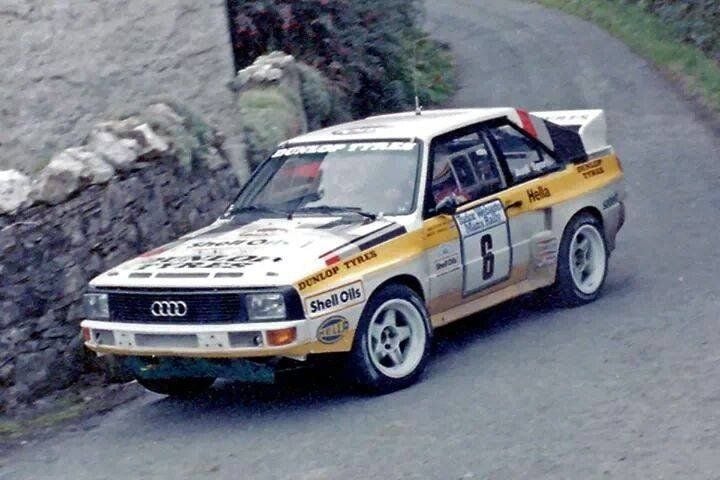
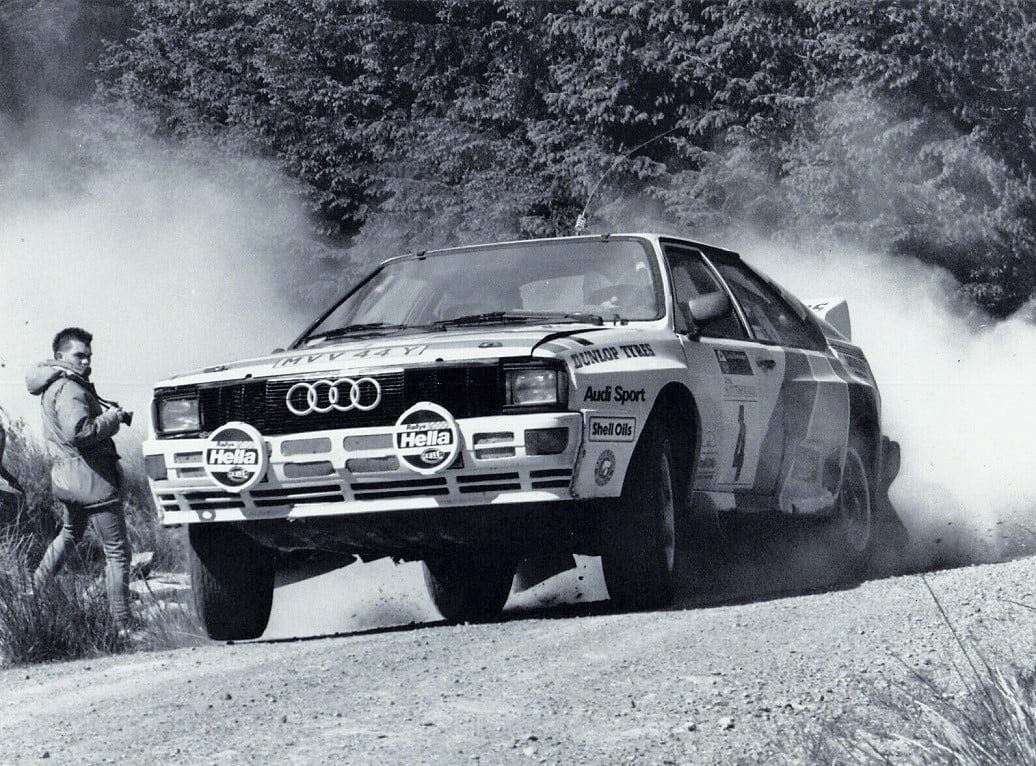
Turner realised that 4WD was the way forward and our man was offered the RS1600 for the ‘83 British Championship and RAC. “I know it was not a great season, but those boys at MCD worked really hard and we ended up with a 13th O/A and a Class win on the RAC in a car that only produced 136 BHP”. In 1984 Malcolm took the decision to purchase Stig Blomqvist’s’ Quattro. “I was in a hole and needed to get back to being at the front. The year was a bit disappointing but we did manage to win the Audi Sport, beating Michèle Mouton in the process - that set us up well for 1985”.
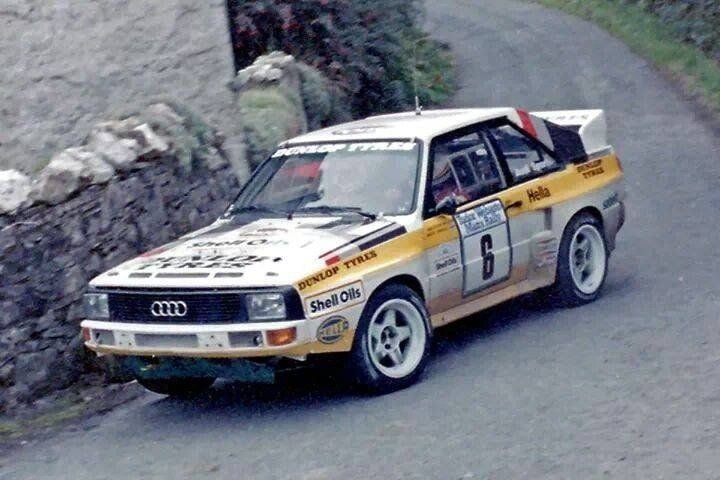
The 1985 season got off to a flyer with Wilson winning the National Breakdown Rally followed by the Welsh and the Scottish. Having retired on the Circuit with engine problems our man still had a lot to do in order to take the title. Gearbox problems forced him out of the Ulster so a win was needed on the Manx, “Audi loaned me a Sport Quattro but they never got a Sport Quattro back. We were going well, and at one point I remember thinking, I’ve never been through this stage so fast. The Baldwins is a stage that Tony (Pond) used to excel on, so I decided I was going to give it some on that stage and put a marker down. I came up to these compressions and we literally flew, I had to put the lock on and we actually landed ok but the suspension kicked up and we nibbled the wall and ended going over several times and that was the Championship finished”.
Not clinching the title after winning half the rounds was a hard one to take, but by this point bigger drives were on the horizon. “After I won the ‘85 National Breakdown John Davenport spoke to me about the 6R4. John wanted British drivers in a British team and wanted me involved with the testing. I was testing the RS200 and we entered the Lindisfarne, which we won. Then ARG offered me the chance to test the 6R4. Basically, Ford offered me a two-year contract and ARG offered me a three-year deal. I really wanted to have a three-year plan so I went to ARG, as they also offered me a seat on the ‘85 RAC, which was something Ford couldn’t do”.
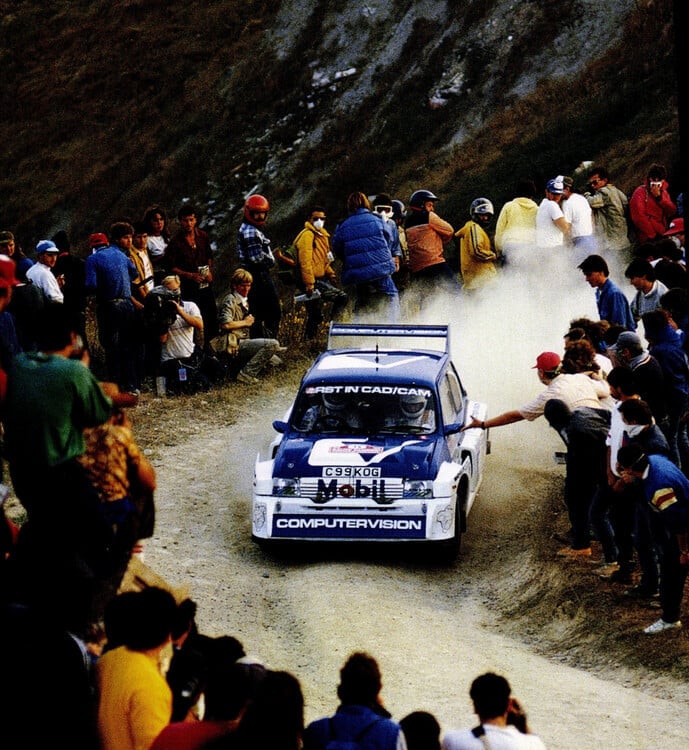
It must have been a very difficult decision to have to make, here we had a dyed in the wool Ford man choosing between two brand new cars that had no track record in WRC events. Before long, it was RAC time and the all-British car and drivers lined up against the best in the world. In the end Tony Pond received enormous credit for his fine third overall but Malcolm led the 6R4 charge early on, “I was beating him but the engine went bang in Dovey”.
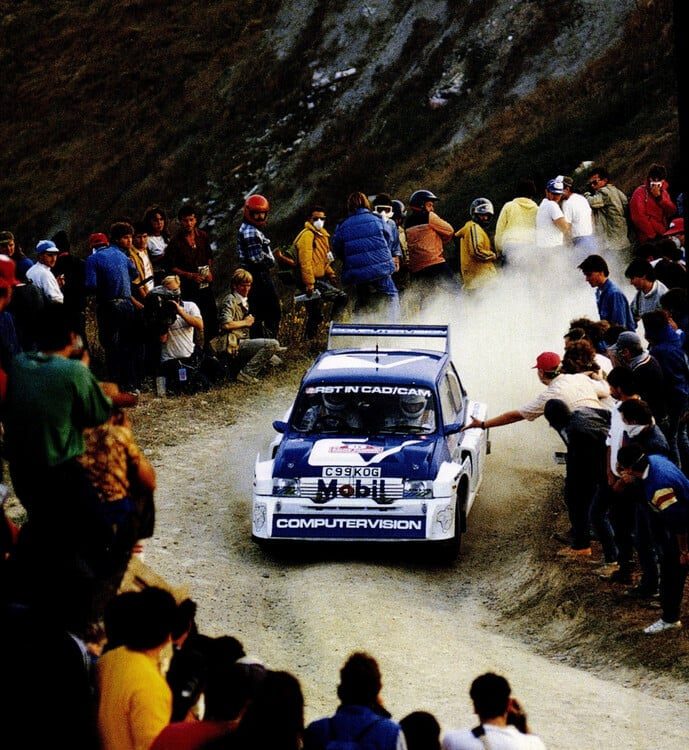
I asked Malcolm if he thought there would be too much pressure on ARG if the car had won that RAC; “possibly from the public’s point of view, but not from mine. I wanted the first season to acclimatise to the events”. ‘86 did turn out to be a bit disappointing, only three finishes were achieved, the best being a fine fourth in San Remo. “We were plagued with mechanical issues; Sweden was very frustrating as we were sitting in third when the cam belt went. In the second half of the season everyone was chasing a seat for ‘87 after GpB was banned and there was really only two teams, Mazda and Lancia, so maybe I pushed a bit too hard with this in mind”.
Did being away from home for up to 3oo days that year affect him? “No, I was there to do a job, it was all I wanted to do. It was hard on the wife but she understood”. In 1987 no long term works drive was forthcoming and our man started the season doing the British National Championship in the 6R4, mainly to show potential customers what the car could do and to provide a benchmark for those fortunate enough to have bought one. It was plain sailing until he rolled the car into a field on Gartly Moor on the Granite, and the team decided to pull the plug on the rest of the series.
Malcolm went on and did the Scottish in a Works 205 and finished a terrific sixth, although he unfortunately put the car off in Ulster and failed to finish the Manx. The RAC was then undertaken in a Kadett, but a non-finish ensued. I asked him if it all seemed like a bit of a comedown after those crazy GpB years with incredibly fast cars and football-sized crowds on each corner of the stages. “No, I didn’t see it that way at all, for me it was a new challenge, I had less power and FWD so it was something new to focus on. Once the helmet was on, I had people to try and beat”. It was perhaps this kind of attitude that has made the popular Cumbrian the success he is now.
Malcolm spent the next couple of years driving in the British Championship with the Astra and also competed in selected rounds of the WRC, and some top results were achieved - a third in New Zealand and a sixth in Australia being the best of the bunch. “I had a great time at GM, they really were a fantastic bunch of guys to work with. I did really want to get back into a 4WD car though and I was approached by Peter Ashcroft who told me he wanted me back; he wanted me to take responsibility for the testing and competing in the Sapphire 4X4 in 1990, and I was offered a couple of WRC events and the British programme in the 2WD version. I jumped at the chance!”
The WRC ventures proved frustrating again as Malcolm failed to finish in Finland, Italy and Spain. Meanwhile, in the UK, he took fourth in the Championship after a good start which included a third on the Cartel and a second place in Ireland and Wales.
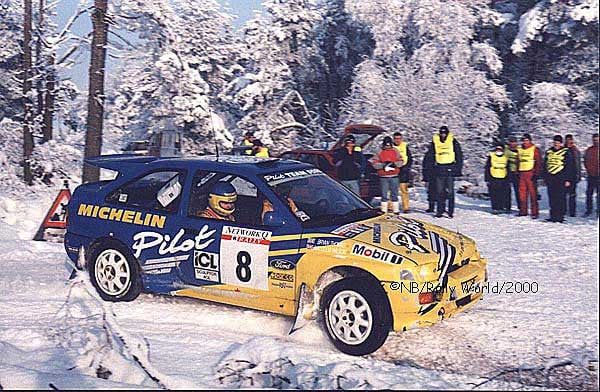
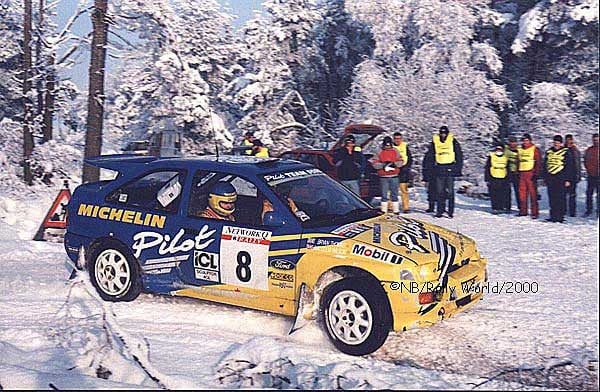
For 1991 Malcolm started six WRC events and finished three of them, a seventh in Monte Carlo followed by a fine fifth in Corsica and a tenth in San Remo. His best result on a WRC round would have to wait until ‘93 when he secured a fine third O/A on the Network Q Rally. Wilson was delighted especially as the conditions were so bad. The next year saw him remove the monkey from his back when he finally won the British title. “We retired on the Rally of Wales so the pressure was on us the whole season, thankfully we did it in the end”.
Having covered Malcolm’s career in some detail, it was time for some quick-fire questions!
So, what was the best car you have driven?
“Everyone knows I love the Escorts, the angles you could get the car at were ridiculous, but I have to say the most rewarding car when you got it right was the Quattro; it had no Anti-Lag, no handbrake, I had to constantly remind myself to keep the power on”.
Pace notes or maps?
Malcolm had a good think about this and replied, “Maps until you hit thirty, then the bravery stars to go and it’s time for notes. If you have a really good navigator maps were fine”.
Favourite WRC rally?
“Sweden is a fantastic rally. In the UK I loved the Scottish International and I was at every event from 1970 onwards”.
That opened the door for me to ask why he went so well in Drummond Hill, a stage where he was practically unbeatable and held the record for many years. A smile appeared. “What a stage, fantastic! It all started because I used to get nothing but problems on that stage so I just decided to give it everything every time I did it. I loved the undulating nature of the stage, a real man’s stage!”
Since we were at M-Sport HQ I decided to get a bit current, so I asked Malcolm;
If you had a month’s practice, where do you think you’d finish in a current WRC round?
“Well, there’s no way I’d get near the current works boys in the WRCs but I’d like to think top ten, ahead of the R5s, I think it might be a struggle though”.
What would a current WRC driver think if he jumped into a GpB car and tried to be competitive?
“The problem is the current cars are absolutely set up to the driver, you just couldn’t do that in GpB cars. I remember dreading coming to a hairpin in the Quattro, not only was I thinking about my driving, I had to think of the correct way to get the Audi around it, it’s hard to say but one thing’s for sure, the cars are so different now”.
Name the greatest driver ever?
“Hmmm, ok. People will say Loeb but, for me, if Seb (Ogier) and Julien (Ingrassia) keep going I would say they will be the best team to ever compete in the sport”.
I asked Malcolm to name four rally people he would invite to a dinner party.
“Seb Ogier- best driver I’ve ever worked with, a complete all-rounder and such a clever driver. Marcus Grönholm, a great character and a fantastic driver. Luis Moya, he can bring the entertainment, we can listen to his funny stories about Colin and the other drivers all night, and Walter Rohrl; he was my absolute rallying hero, and he got to a stage where he was dictating the events he did, the team managers bought into it because they knew he would give total commitment on the rallies he chose, incredible driver!”
What is your biggest regret in the sport?
“Thinking I could do it all, running a team and competing. I’ve realised that to do this job and to be successful I have to be 100% focused. However, I would not change a single thing about my career; everything I have done in the past has got me to where I am now”.
I asked Malcolm if he missed driving. “I do miss it but I wouldn’t want to do it in the current cars, I would not be able to get motivated. I would love to go back in an Escort, I can still jump into one and tell you instantly what it needs to set it up better, I loved them. I do still jump in the new cars that come through here also, but it’s just not the same. I scored 28 fastest stage times on WRC rallies. For me, it’s all about the memories”.
I think there are millions of us older rally fans who would agree with that…