JOHN HAUGHLAND
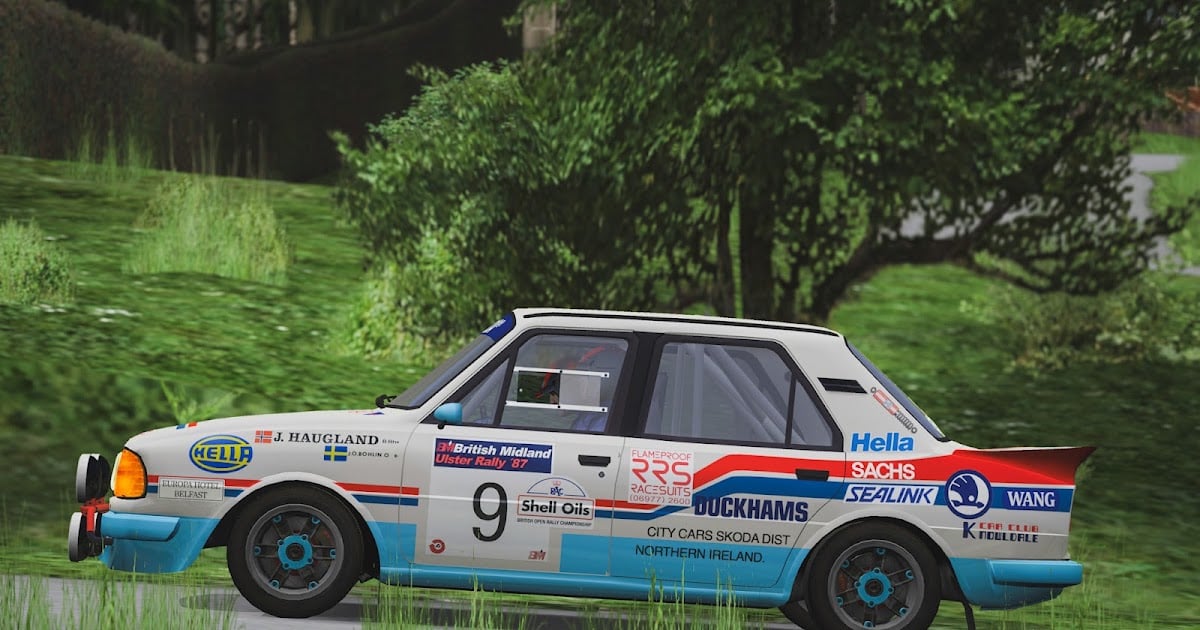
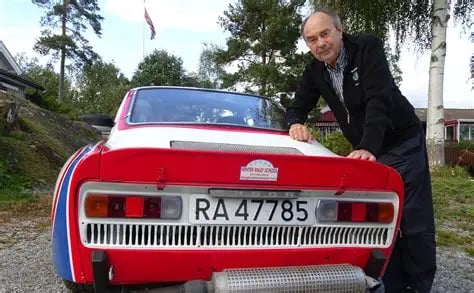
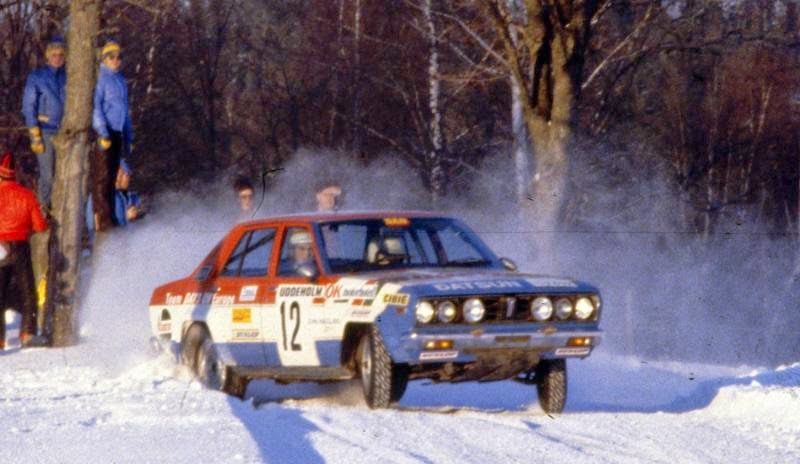
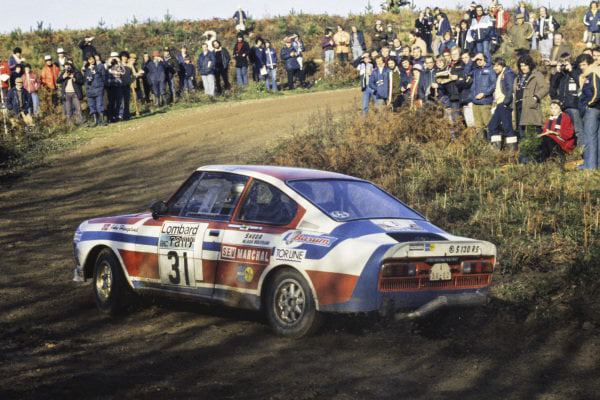
You began your career back in 1966. Was rallying very amateur in Norway back then?
My start in motorsport was in 1965 when I competed in circuit racing. At that time in Norway it was ice-racing in the winter and 1000m oval-tracks in the summer. The oval-tracks were basically made for horse-racing with sulkies.
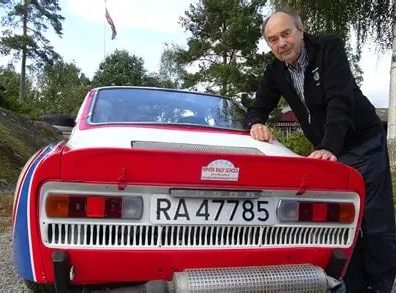
I was an mechanical apprentice at the Skoda importer, and built myself a Skoda Octavia Touringsport. I used it for the oval races in the second part of 1965, and started ice-racing with it in January 1966. In the third race, which was a 2-hour race for 40 cars, the visibility was bad, minus 20c and a lot of ice-spray. I went off and got stuck in a snowbank, and was immediately hit in the back by a Renault 8 Gordini, and that was the end of my car. It was repaired and then sold.
I wanted to get a new Skoda 1000 MB rear engined car to drive in the up to 1000cc Gp 1 Class. I begged my boss to give me a good price for it, and he did and I borrowed money from the bank and bought it. I prepared it well, and raced it for the rest of 1966 and into 1967 and had many good results in about 20 races. In 1967 I did my military service, and was still paying everything myself.
You were offered a works Skoda drive in 1972, tell us a bit about the team at that time?
But before I got works drives in 1971, the Norwegian importer decided to help me 100 %. when I came back after my military service, they offered me a full-time job to drive and run the competition cars. At that time, we had got two Gp 2 cars, with parts from Skoda motorsport.
So, I had a budget and full payment to drive from 1968, and in ‘68, ‘69 and ‘70 I did more than 40 races per year, and won most of them. Then the importer wanted me to go into rallying, and we prepared a car for Rally Norway 1969. My first rally.
We rolled on the live TV-stage but got the car going again live on telly, and finished 12th OA and 2nd in Class. Then my boss told me that rallying gives much more PR than racing, and ordered a rally car for me to drive from the Skoda factory. I used this to learn rallying in 1970, and did very well. He then bought a better car, and at the same time I was invited from Skoda to do two rallies for them in 1971; the Austrian Alpine Rally, and the tour dèurope - 1400 km long over 2 weeks through 14 countries. In both rallies we won our Class, and finished 6th OA in Austria and 4th OA in tour dèurope, beating the other works cars and resulted in a works contract from 1972.
The Skoda works team was very impressive, they worked to a very high standard, the cars was immaculate and the motorsport department was big, and did both circuit racing and rallying. They had very good designers, engineers and mechanics, and they and my fellow drivers took very good care of them and taught me a lot.
You started competing outside Norway, did you enjoy the new adventures?
From 1972 I did a lot of rallies in Europe for the factory, and enjoyed it very much. In addition, some rallies and races were still in Norway in the first years. It was like a dream for me to work with such professional people, and get paid to do my hobby.
You did the 1971 RAC. The event had dreadful snow and nearly ground to a halt; do you remember that rally?
1971 RAC Rally was excellent, not dreadful, a lot of snow suited me perfect and I remember it very well. We did not have much power, but in the snow with no studs it did not matter.
Around this time, did you never wish you had the latest Escort with its more powerful engine?
At that time, I of course had an ambition of maybe getting a works drive with one of the big teams in the future.
You did the ‘73 Welsh - did Skoda see the UK as an important market?
Skoda looked at the UK as a very important market. I got in contact with Skoda GB from 1970, when they gave me a budget to do the RAC Rally in the rally car I used in Norway, and that was the start of a co-operation that lasted for 20 years. For the UK Rallies, Skoda GB had the budget and the factory supplied rally cars and service from 1972 which allowed me to do the RAC Rally each year for 19 years, and also many rallies in the British Open Rally Championship.
Skoda GB used the rally results very much in their advertising and Skoda promotion, as the car did not have such a good image, and they wanted to improve that with rally results. GB was then the best export market in Europe for Skoda.
In 1975 the team brought out the 130 replacing the 120. What were the main differences in the car?
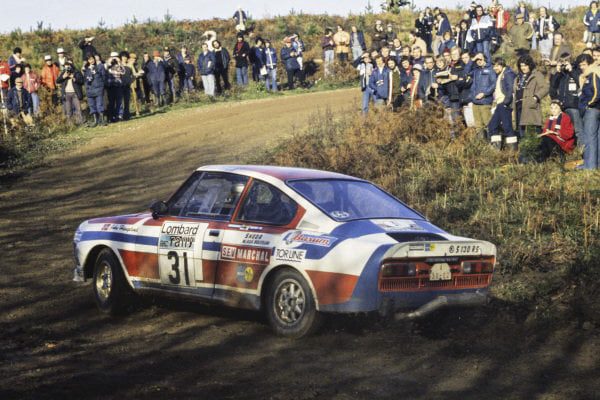
The 130 RS was an incredibly good rally car, especially on tarmac - we used that from 1976 and I won the Barum Rally that year in one of those. It was wider, lighter, had better rear suspension, a wider track and bigger brakes. It was basically designed as a circuit car. The improvement felt by the drivers was basically more grip and stability, the engine and gearbox were the same as the 120 S previous car but it was quicker because it weighed less.
You achieved your first big win in ‘76 after four straight retirements (Greece x 2, Sweden and Finland.) Winning the Barum Rally must have been very rewarding for you and the team?
Winning the Barum Rally was a big reward. It was my first International Rally win and a confirmation for the whole works team and factory that this car was very good.
By this point you were recruiting some top named navigators such as Martin Holmes, Bruno Bergland and Fred Gallagher.
Arild Antonsen was my main co-driver from the Austrian Alpine Rally in 1971 until Barum Rally in 1976, but then he backed out because he thought it was getting too fast, and he started to be nervous, but he had a brilliant end of the partnership with me with the Barum Rally 1976 win.
Then I worked with different co-drivers, such as Fred Gallagher, Bruno Berglund, Martin Holmes, Bobby Willis, Peter Foubister, Petter Vegel and Per Oddvar Nyborg. From 1979 I started a partnership with Jan Olof Bohlin from Sweden, and he was then my main co-driver until 1990, but as Jan had a normal job, he did not always have the time, so Petter Vegel, Monika Eckardt and Bobby Willis were my reserve co-drivers.
In 1978 John Davenport asked you to drive the TR7V8 on the RAC. How was the experience and how did you adapt to the increase in power and RHD?
The TR7V8 drive in 1978 came along with John Davenport and Fred Gallagher. Fred started his International career with me in 1975, and he paid back by advising John to offer me the drive in RAC Rally 1978. I enjoyed the drive very much, there was so much power! I adapted well during the rally, which I did with Ian Grindrod, and finished a safe 12th overall.
Simo Lampinen and I were told to be safe and take the cars to the finish as they had a reliability problem, and Tony Pond was told to try to win. Tony finished 4th and Simo retired. The RHD went ok and they gave me a road car to take back to Norway to get used to it, but when on the stages it took a bit of time to get used to.
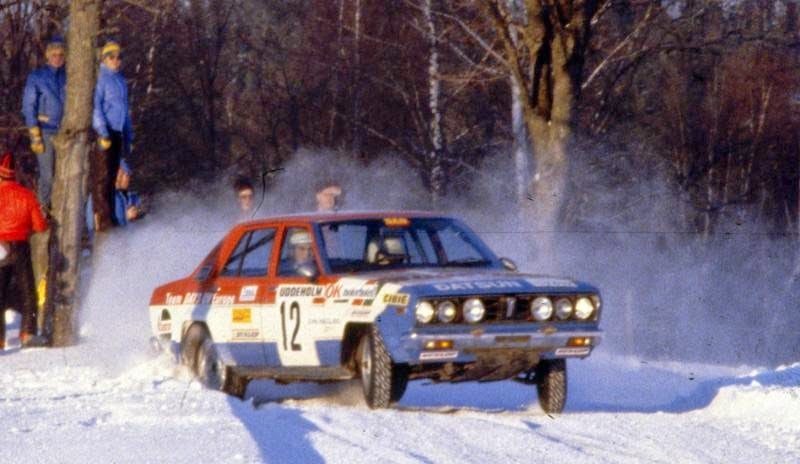
Then Datsun offered you a drive in ‘79 in Sweden and Portugal. Did you want more events with them?
Datsun offered me a 160 J (also RHD) for the Swedish 1979, with Martin Holmes co-driving. We did a good bit of testing in Norway, and in the rally, we finished 9th. Then I was also offered a drive in Portugal, but the car was late getting finished so I would have to pick it up in the UK and drive it by road to Portugal, and then no time for recce, so the drive was later given to Timo Salonen and I went back to Skoda.
Was it difficult accepting you were the number one driver at Skoda then you were down the pecking order at BL then Datsun?
The reason I went back to Skoda was that there I was number 1 and got everything as I wanted it, and I did a lot of testing and development work so I got it as I wanted it! At BL and Datsun with Andy Dawson I was to take what was given to me, and, of course I had no experience with those cars, so that was logical. Then I was welcomed back to Skoda and the 130 RS felt like putting on an old suit. It was like an extension of myself.
You only did a few events in the Skoda in 1980 but managed to win two ERC rounds (Barum and Skoda Rallies). Were you hoping a big team would come in for you or were you content at Skoda?
I had driven for two top works teams so I had already experienced that and was very happy to go back to Skoda and had no more ambitions to drive for anybody else.
And, in fact, my best times started after the Swedish in 1979, when I came back to Skoda and did the Wolfsburg-Berlin Rally with Petter Vegel and finished 4th OA. In 1979 we did a big development job on the 130RS and improved many small details which made it 1.5s quicker per km.
I won both the Skoda and Barum Rallies in 1979 and 1980, and in 1981 we finished 2nd OA in the Janner Rally behind Frantz Wittman in the very first rally for the Audi Quattro.
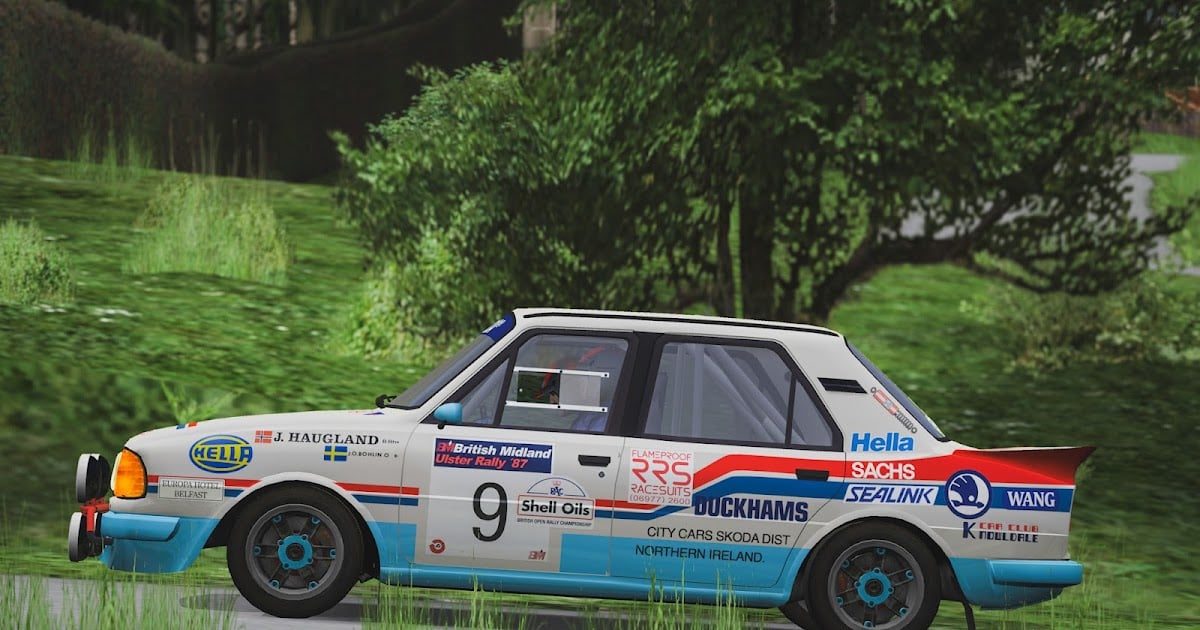
In 1983 Skoda started to take the British Championship seriously. Did you enjoy the events over here?
I enjoyed the British Open Rally Champion rallies very much, mainly because of the variations. Each of those rallies had its own character, and I have always liked to do rallies in the UK. There is a very friendly atmosphere between the competitors, a lot of good humour, great public who like underdogs...and Great rallies that are always very well organised.
Which event was your favourite in the UK?
My favourite rally in the UK was the RAC Rally. In the British Open Championship, it was the Manx Rally, and then the Welsh Rally. I liked the Scottish too, and did it 7 times, however, the rough roads, where you could not drive flat-out and had to look for stones and holes to avoid punctures, were not so good for us with 13-inch tyres! We also needed lighter tyres, because of not having too much power, which made it a bit of a compromise.
Which Skoda did you enjoy driving the most?
The Skoda I liked to drive the most was the 130 RS on tarmac, and the 130 LR Gp B car on the loose. The 130 RS on tarmac needed big balls as it had so much grip - you had to arrive at the corners with very high speed,
conserve the grip, be smooth, and hold the steering wheel at the same angle. Nice lines and minimum moving of the steering wheel to use all the road. The 130 LR had very good handling, it was very good fun on the loose, snow and gravel, but also good on tarmac with big slicks.
Compared to the 130 RS, the LR had rear disc brakes, brake balance, 5 speed gearbox and a different rear suspension which gave it the good handling. The LR was faster than the RS, but not as competitive as it was 10 years later from 1985 to 1987 compared to the 130 RS from 1976 to 1983.
What would you consider your finest performance from 1966 to 1990?
My finest performances must be:
Barum Rally: 1st OA in 1976, 1979 and 1980.
Rally Skoda/Bohemia: 1st OA in 1977, 1979 and 1980.
Janner Rally: 2nd OA in 1981, and 4th OA in 1982.
Tatra Rally: 2nd OA in 1976 and 1983.
You retired in 1990. Looking back, how do you view your career?
I was very lucky as I went for the right make of car, and I actually only paid for my driving 1965 to 1967. From 1968 until today I was paid for driving racing and rally, and working in motorsport.
Also, Skoda have been very good to me, and this has continued after I stopped driving. I have regular contact with the development department, the museum and the motorsport department. I am at the factory more times every year, and many times we also have social coming together with all of us, still alive, that worked together in the old motorsport dept. up to 1990, so Skoda are looking after their old drivers very well.
My mentor, Karel Svabek, did everything for me from 1967. Without him I would not have got my Skoda works drive. Sadly, he died 3 years ago.
What do you think of modern-day rallying compared to the ‘80s?
Modern day rallying is very good, it is very professional, and with very good cars. However, compared to rallying in my times, it is more sprint and not so much endurance, and they now also have the service parks. We did more driving in the dark, much longer stints, and had service all over the place. As an example, the RAC Rally and Circuit of Ireland had more than 800km stages, and each stage driven just one time, and in the ‘70’s there were no pace-notes. Also, it was normal to do 1 day, 1 night and 1 day between every overnight halt - a bit different compared to today. The drivers had to look after the cars, and also be able to do repairs themselves.
Over the 30 years of the Winter Rally School, I have had the luxury of being able to follow the development of the rally car as many of the drivers and teams are bringing the rally cars for training or to test. I have been in all these cars, and driven most of them as an instructor; WRC, Super 2000, R5, Gp N 4WD and all the smaller front wheel drive cars.
As an example, M-Sport were testing with us in December 1998 with the test WRC Focus which was new then.
On one of our classic stages, Colin McRae did 5.12. In 2018 Kalle Rovanperä did 4.19 on the same stage in a R5 Skoda Fabia - that shows the rally car development over 20 years. Both cars had about the same power, but the main difference is in suspension as well as many other smaller details.
In addition to us being a school for rally drivers, we also have a lot of teams and drivers coming to test. We have a good collaboration with M-Sport and Skoda Motorsport, and M-Sport Poland are bringing the JWRC drivers training and testing with us before the Swedish Rally.
On the stages many of the corners have names after drivers have gone off... stuck in snowbanks. Some drivers have their names on more corners, and some corners have more drivers’ names...
What I see as a big change in rally cars from my time, say from 1990 until today, is how much easier the modern rally cars are to drive. They need less physical work, using only 2 pedals, having direct power steering, and very good balance mainly thanks to shock absorber development and efficient diffs, which means very little steering-wheel movement, and the driver never needs to move the hand positions. They are so easy to drive thanks to less physical work, but things happen quicker, which confirms even more than before that the most important component in the rally car is the driver’s brain!
Did Petter winning the title in 2003 do a lot for the sport in Norway?
Petter Solberg winning the title in 2003 was a huge lift for the rally sport in Norway. He became the sportsman of the year, and had huge media coverage and inspired a lot of young drivers to go into rallying. Just look at Andreas Mikkelsen, Mads Østberg, Eyvind Brynildsen and many others - they are a result of Petter Solberg’s success. Also, the Subaru sales have never been as good in Norway as through those years.
You have been running the rally school very successfully for 30 years now. Can you tell us some of the drivers you have taught?
When I stopped my rally-driving in 1990 I wanted to see if I could make a living from my contacts and experience. It has been working very well, and the Winter Rally School has been our main activity. We have worked with about 1700 rally drivers from nearly 50 countries, which have won four World Championships, three European Championships, and nearly 200 National Championships. The first driver with us that became a works driver was Richard Burns, the last one Craig Breen, and in between there have been many others like Nasser Al-Attyah.
You must get a lot of satisfaction when some of the pupils go on to reach the highest level in the sport?
When some drivers that I have worked with are winning, I feel very happy and proud. Of course. I should. It is the same feeling as I had myself when I was winning. Great satisfaction. Ok, we are earning our money on the Winter Rally School, but also when our customers are doing well, it feels like a great reward to us, and we are all celebrating!
What advice would you give a youngster who wanted to go all the way in the sport?
As in all sports, if you want to go to the top, it needs a lot of work. First of all, get the finance organised, then training, and take all opportunities to practice driving; testing, training, competing in rallies, it is the time behind the steering-wheel that is the most important. Practising. As in all sports. Then put a lot of work into making optimal pace-notes. It is cheap to go out in a road-car with the co-driver and dictate pace-notes on small country roads, the only cost is petrol. Then, learn about set-up, and be critical. The driver must make the car help him to drive fast and safe.
The target is that the rally car must feel like an extension of yourself. You must have full control, feel that you can do everything with this car, and then you will be fast.
Also, take care of personal preparation, make sure that you are in good physical and mental condition; as I said before, the most important part in a competition-car is the driver’s brain!
So, the driver must be very good in 4 areas: driving, pace-notes, set-up, and personal preparation. If the driver is lazy in any of these areas, they will never be successful.
You can drive any car on any stage in the world. What car and which stage?
Lancia Stratos over Col di Turini.